← Back to research

Telescopes & Instruments

NASA

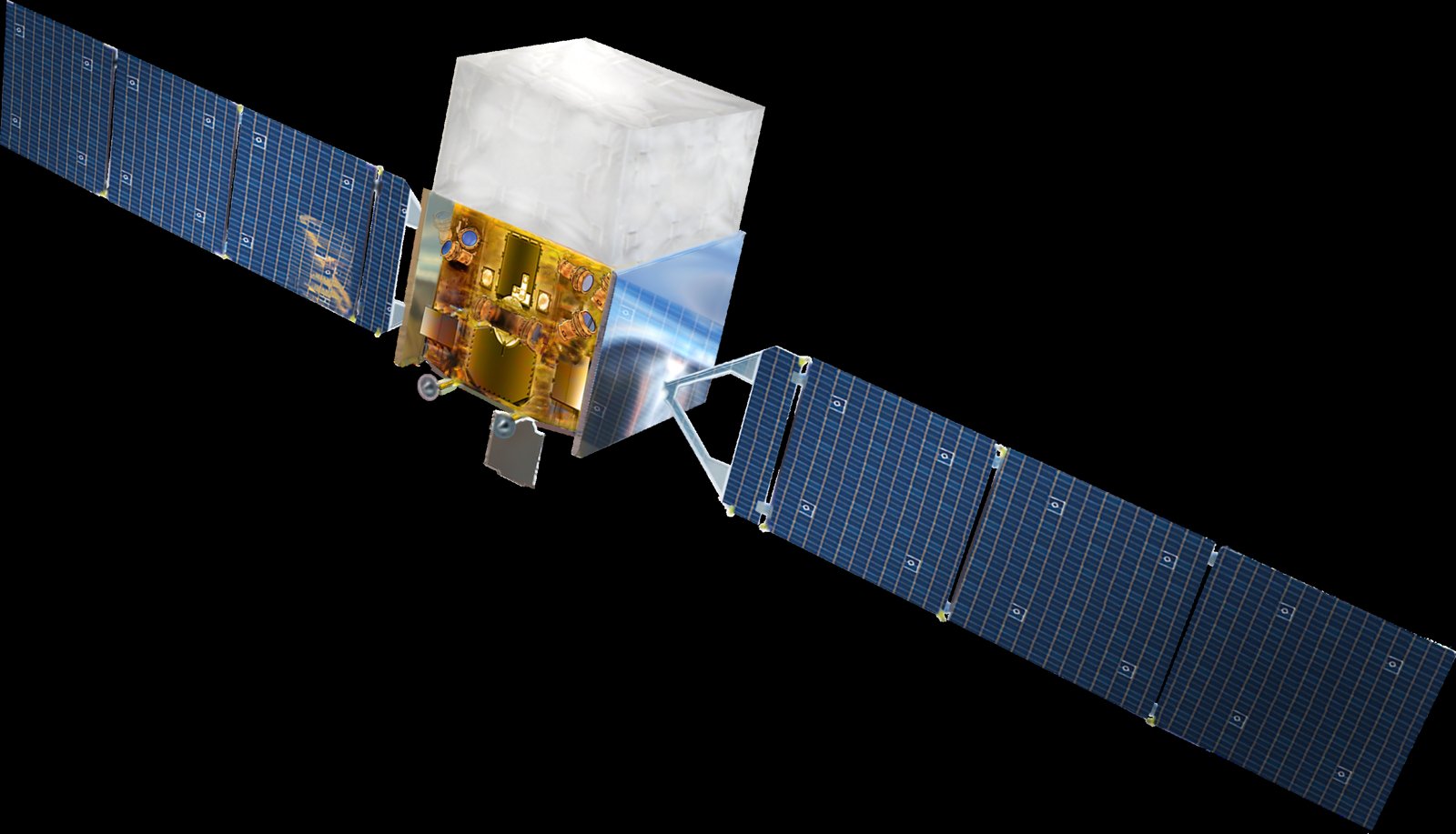
Fermi-LAT

The Large Area Telescope on NASA's Fermi satellite, surveying the whole sky in GeV gamma rays.

Sensitive to photons from 20 MeV to over 300 GeV, the Fermi Large Area Telescope (LAT) scans the entire sky every three hours, serving as a premier instrument for investigating high-energy phenomena like gamma-ray bursts (GRBs). By combining LAT data with observations from the on-board Gamma-ray Burst Monitor (GBM), our group is advancing our understanding of these powerful cosmic events.
Center for Astrophysics | Harvard & Smithsonian

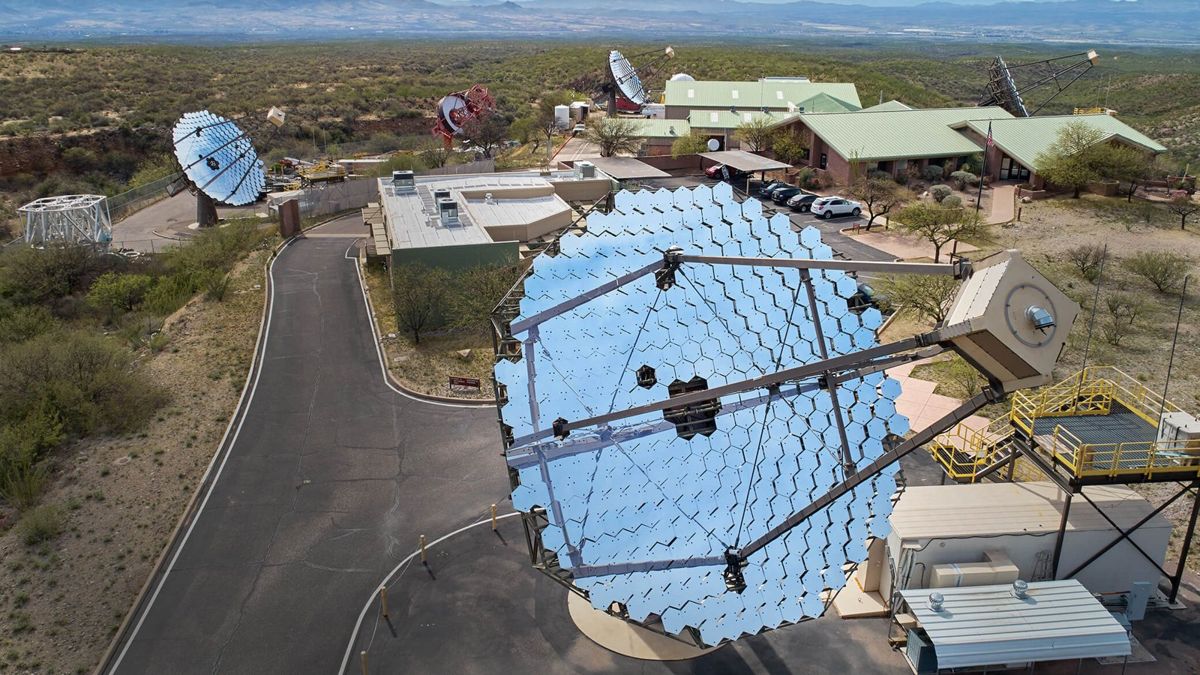
VERITAS

An array of four imaging atmospheric Cherenkov telescopes in Arizona, observing the sky above 100 GeV.

Located at the Fred Lawrence Whipple Observatory, VERITAS is an array of four 12-meter imaging atmospheric Cherenkov telescopes. By detecting the faint Cherenkov light produced by particle showers in the atmosphere, it measures very-high-energy gamma rays from 100 GeV to 30 TeV. Our group uses this facility to investigate extreme high-energy phenomena and search for the elusive nature of Dark Matter.

7DT collaboration (arXiv:2406.16462)

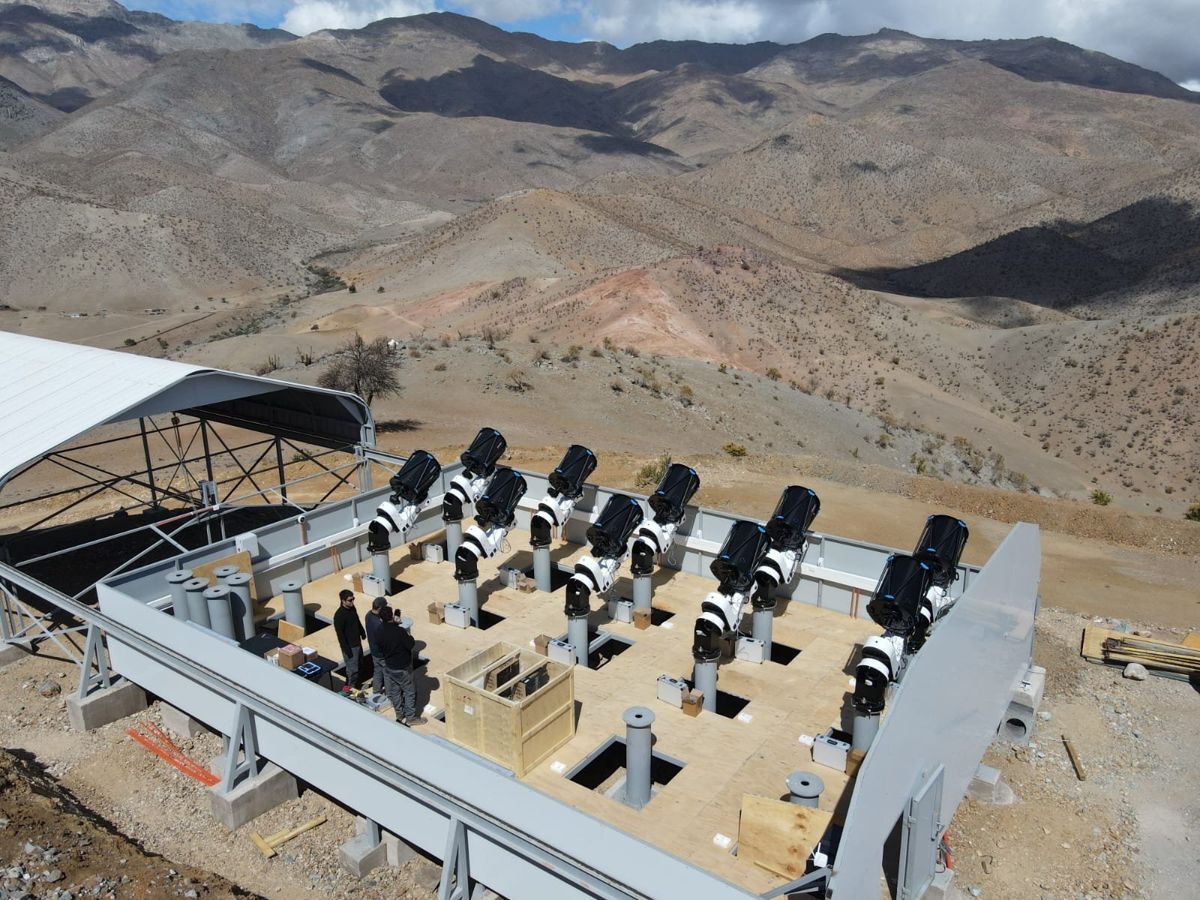
7-Dimensional Telescope (7DT)

A multi-telescope array with medium-band filters for rapid spectral mapping of transients.

The 7-Dimensional Telescope is an array of 0.5-m telescopes equipped with medium-band filters, designed to obtain low-resolution spectra of the whole field in a single epoch. Its rapid response makes it ideal for catching the early light of kilonovae and GRB afterglows, and our members work on the analysis of oberved data, its follow-up observation strategy, and data pipeline.